
“now I come to what I consider to be the main event of my life … but what is the use of meeting a wife if you have no house?”
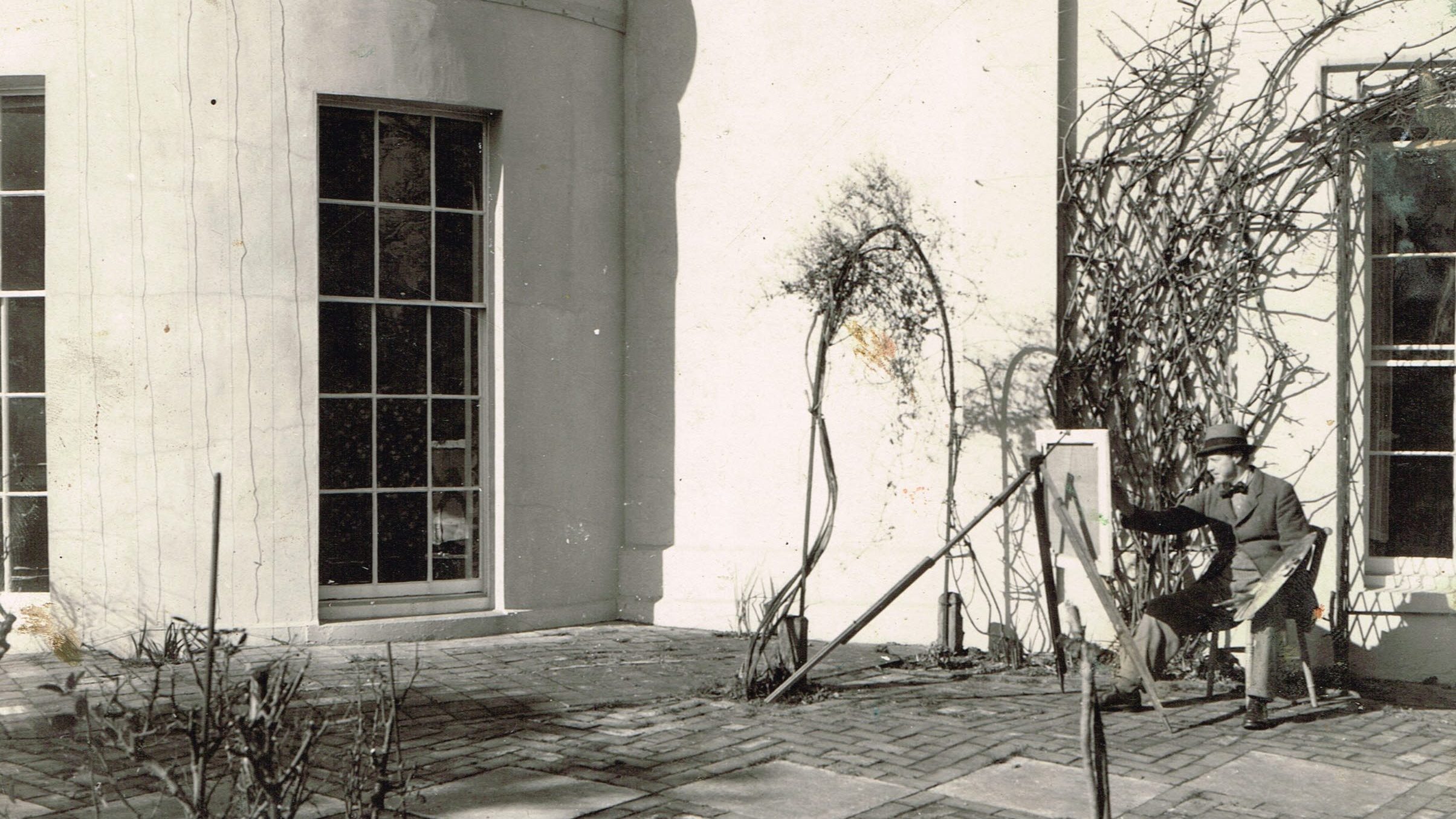
Castle House
Munnings came to look at Castle House in the summer of 1919 with a party of friends. He wrote: “I had indeed found my dream house, river and all … it was a big house for one man.” He was persuaded by a friend, Frank Crittall to make an offer of £1,800 which was accepted: “Still full of fears, I began to wish I had never thought of buying such a thing as a gentleman’s residence. I should never be able to keep such a place! Who was I?”
Violet McBride was an accomplished horsewoman, known in the best circles, and Munnings met her also in 1919. She caught the his attention: “Here was a subject to paint – a good looking woman on horseback, silk hat and gardenia – all complete.” He asked if she would sit for him. Initially she declined but finally she was persuaded.
Violet first visited Castle House in the winter of 1919 to celebrate Christmas along with other friends of Munnings including Laura and Harold Knight.

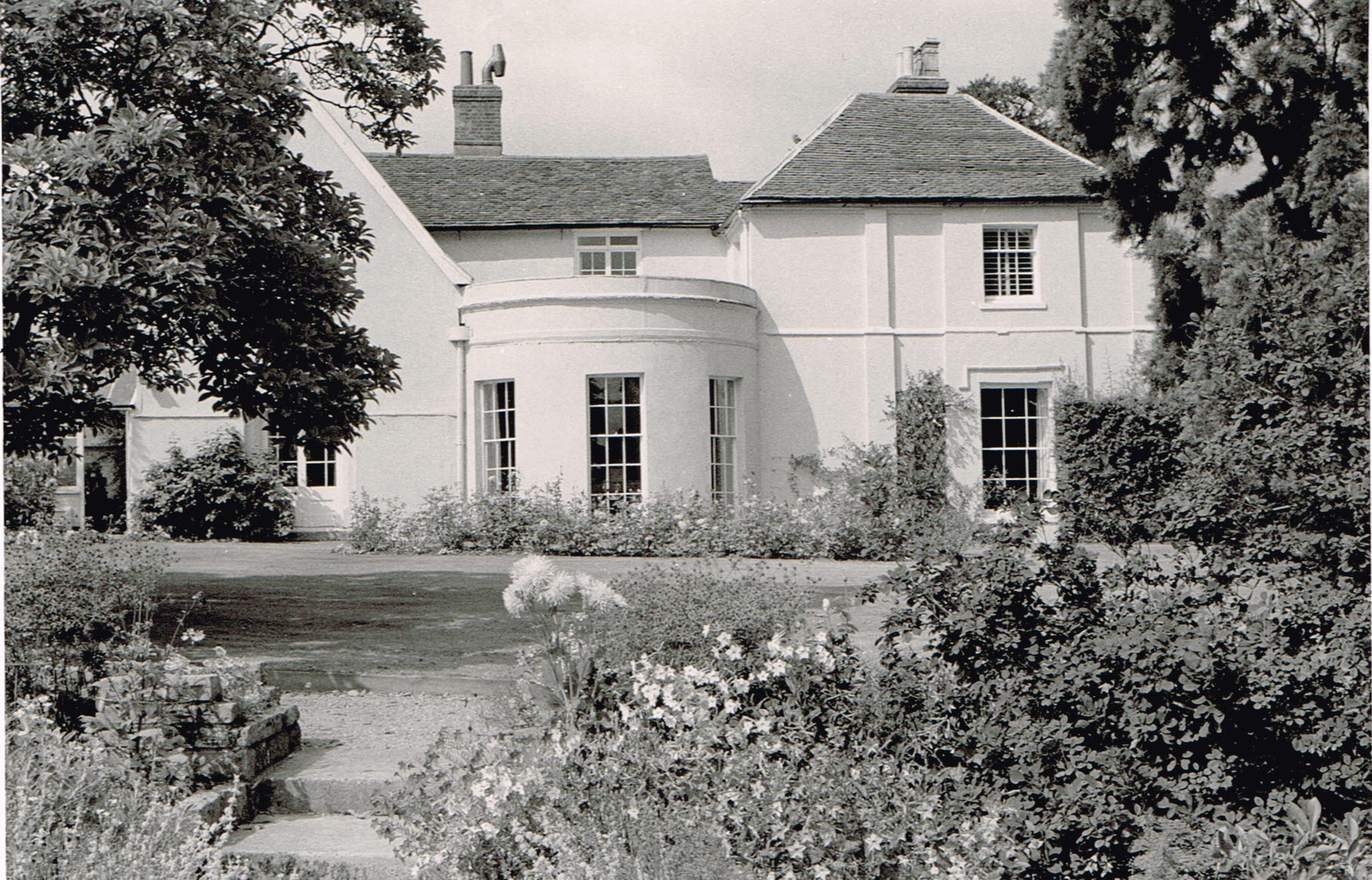
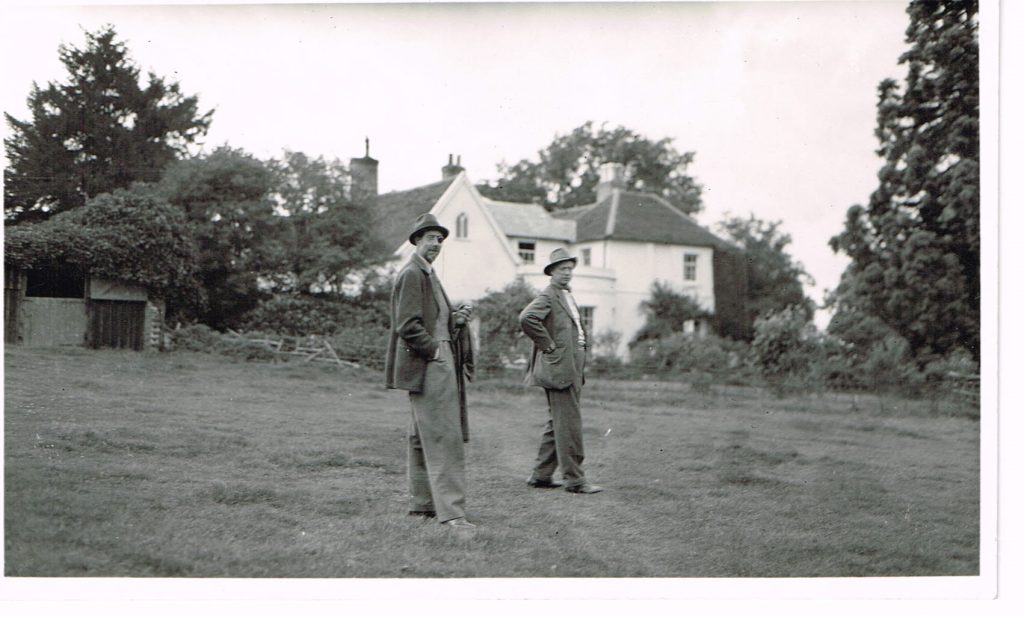
Following their wedding in March 1920, Violet undertook all the domestic elements of Munnings’ life including the accounts and organisation of the household. Violet also contrived many of his commissions during the 1920s and 1930s some of which she secured from her contacts in the horse and hunting world. She saw it as her role to release him from the mundane activities of everyday life so that he had the freedom to carry out his work uninhibited. He wrote “I have been more than blessed with a good wife.”. She said “he was never such a good painter after he married me.”, feeling that he had sacrificed artistic freedom in order to paint pictures for money.
Munnings Art Museum
Prior to his death in 1959, Munnings and Violet had discussed making his paintings more accessible to the public and so, with enormous support from the public, it was Violet who opened Castle House as a museum in his memory in the spring of 1961. In an interview with The Daily Mail in 1961 she said that “I feel that his spirit is still here.”
In 1966 the Castle House Trust was founded to manage and maintain The Sir Alfred Munnings Art Museum. Lady Munnings and the Trustees acquired further paintings in order to show a more fully representative body of Munnings’ work. Lady Munnings died in 1971, having moved to Chelsea in the late 1960s but the Trust continues to run the museum today.


The Studio
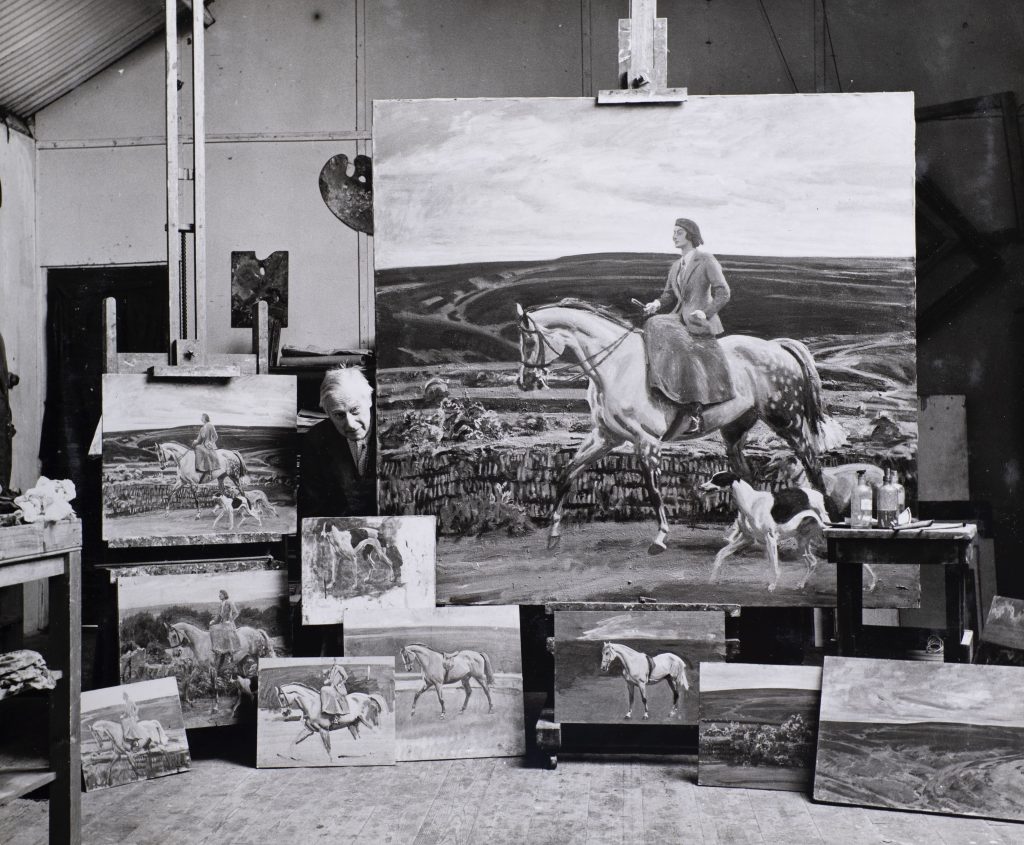
The Studio in which Alfred Munnings created his most well-known paintings still sits in the garden of Castle House and in it remains the paints, brushes, easels and other equipment used by Munnings towards the end of his life.
The Studio was designed and built by Boulton & Paul in Norwich in 1908. This was the year that Munnings moved from his childhood home at Mendham to Swainsthorpe, just south of the city of Norwich. The meadow behind his new lodgings provided an ideal position for a new studio. Boulton & Paul began manufacturing tools in 1864 and went on to produce portable buildings and eventually fighter planes. The studio was designed by an Art School friend of Munnings who had become a designer with the company. The Studio was made and transported in sections to the meadow in Swainsthorpe where it was put together.
After Munnings bought Castle House in 1919, the Studio was dismantled at Swainsthorpe and brought to Ardleigh Station by train. The pieces were then moved by horse and cart to Dedham where they were reassembled here in the garden. Munnings added an extension to the back of the studio which accommodates a large door for horses to enter. Rich Gift and Brown Jack were two famous racehorses who were painted inside the Studio during the 1920s and 1930s.
The brick part of the studio at the front, now the Tea Room, was added in the 1940s to create more space.
For more information on Boulton & Paul, visit Norfolk Historic Buildings Group.


The Architecture of Castle House
“Castle House. Castle Hill. Late fifteenth century Front Range, and south range added in the late sixteenth and early seventeenth century, all timber framed and plastered. Early nineteenth century additions on the north side, rendered brick, including the drawing room. A circular room with domed ceiling was formed in the existing south range. Some later nineteenth century decoration including moulding and gothic detailing in the staircase hall.” (Pevsner; The Buildings of England: Essex).
In the fourteenth century Castle House was one of the prominent clothier residences in Dedham, where weaving was the predominant industry. Woollen cloths were sold primarily at the Flemish Markets and also at Dedham market once it was established. The industry peaked in the fifteenth century enabling merchant weavers to fund the building of Dedham church.
During the sixteenth and seventeenth centuries the English Civil War and the closure of the Flemish Markets caused the weaving industry to decline but there were forty known clothiers in Dedham operating from the sixteenth century onwards, including a number based at Castle House.
At the turn of the eighteenth century the cloth trade in this part of the country was again on the up but had relocated to portside towns leaving Dedham in a state of poverty. Huguenots fleeing France sought refuge in Britain and brought with them the skills to weave silk. Silk cloths were worth much more than wool and so Dedham once again became prosperous. This new found wealth enabled the local inhabitants to modernise and make fashionable their houses, bringing them into the Georgian age. This included the extension and remodelling of Castle House.
The Dedham silk weaving industry declined throughout the nineteenth century largely due to its geographical position with the port towns, again, proving to be much more efficient trading centres.